
Fields & Flight with Artist Karena Ness
Story by Tracy Nicholson
Photography by Britta The Photographer, Karena Ness & Daniel Charles Folkers
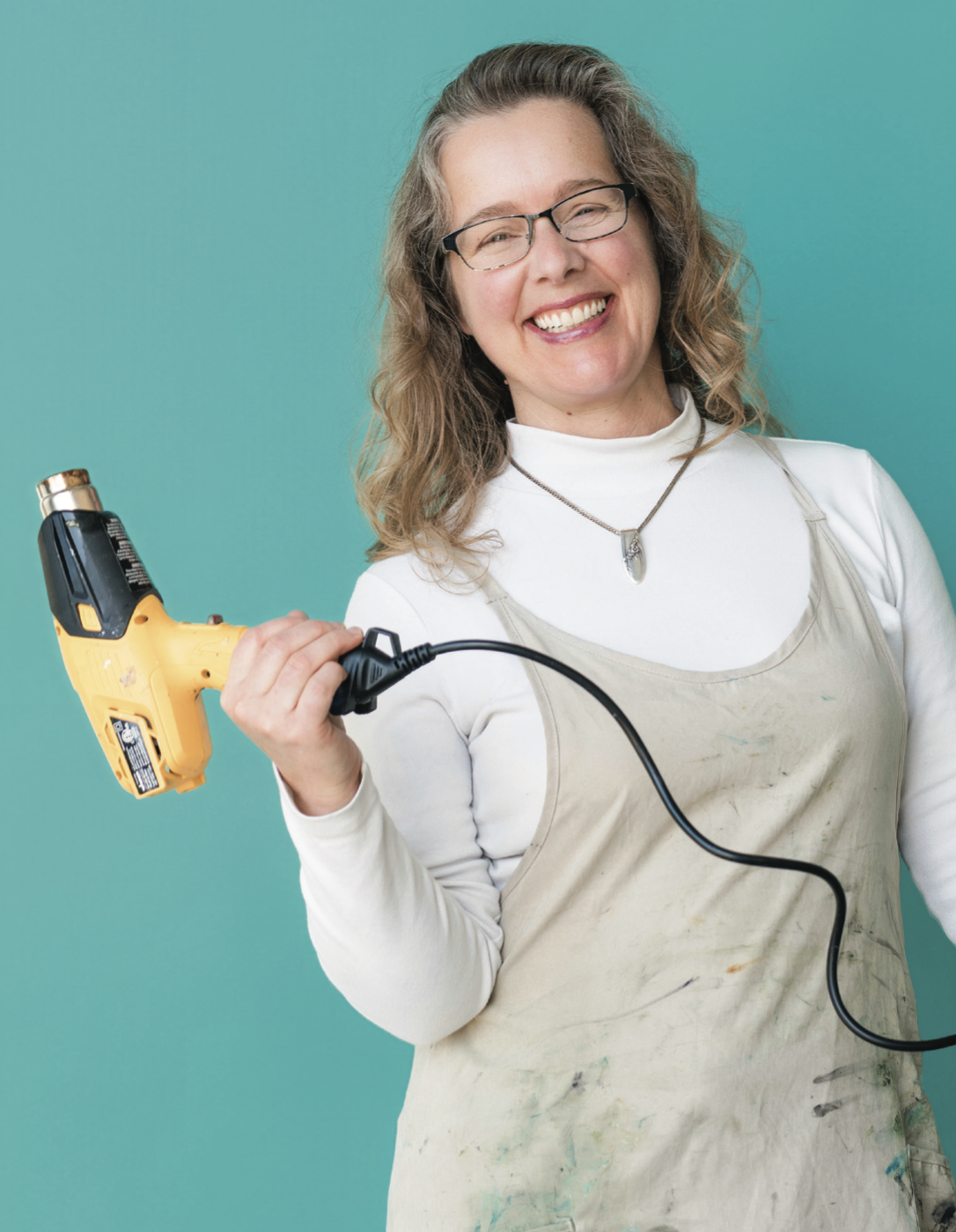
From her studio in Grand Forks, ND, artist and art educator Karena Ness works between intention and discovery, where layers of wax, paper, and pigment turn space into story. Inspired by the vast skies and quiet boundaries of the rural Midwest, Karena creates encaustic and mixed-media environments that feel both familiar and newly unearthed. Her work doesn’t just depict the natural world; it behaves like it — drifting through fields and flight. From her new studio and within her exhibitions at NDSU’s Barry Hall and West Acres, Karena invites us to look to the horizon as she plots the complex layers of land and life.
Evolving Environments
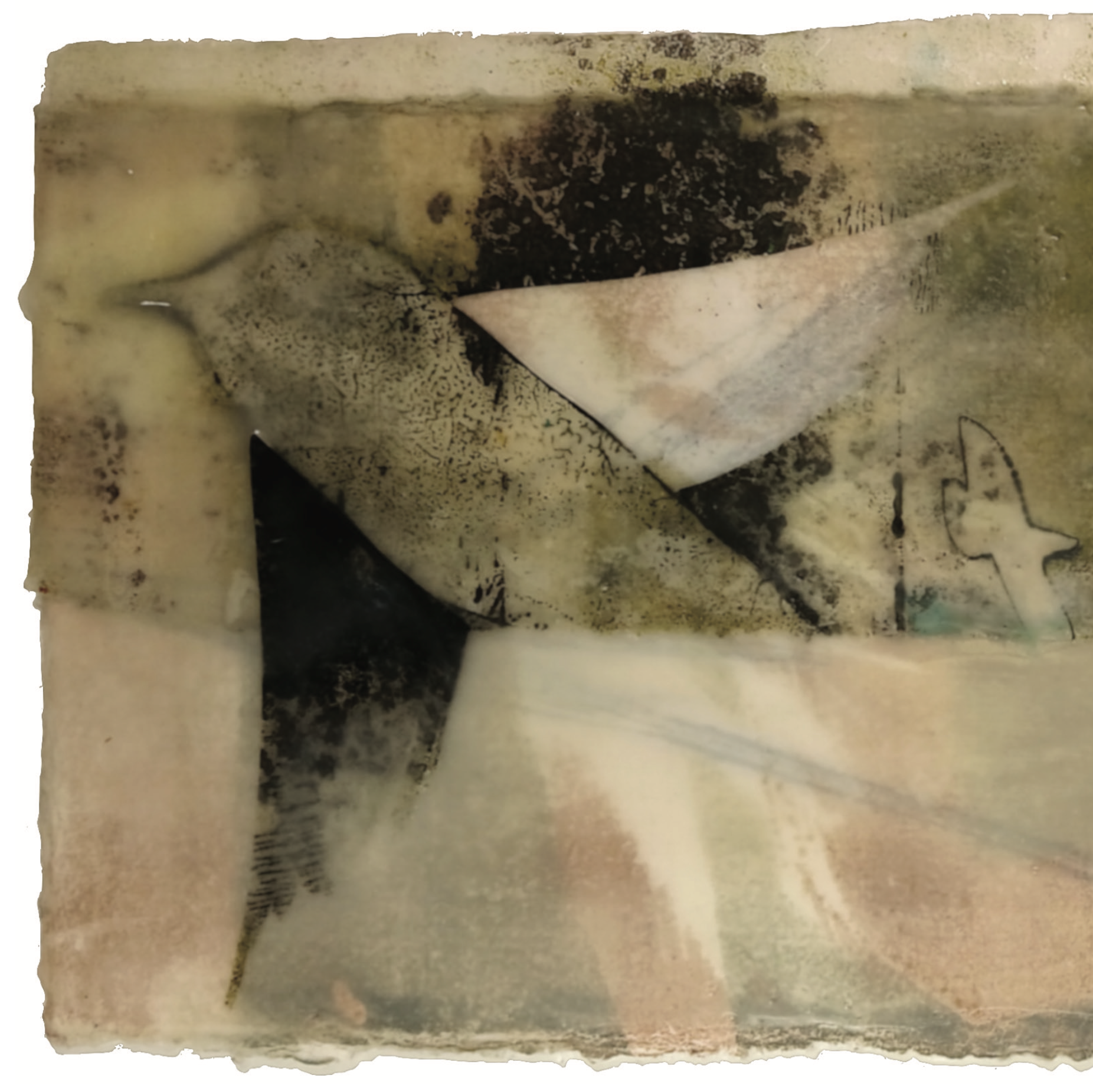
In the wide-open quiet of North Dakota, Karena Ness builds her canvas the way birds build their nests: intuitively, experimentally, and always in motion.
Her encaustic pieces are a reminder that environments—real or imagined—are lived in, shaped, and re-shaped one layer at a time.
Karena’s vivid imagination was sparked by a childhood of outdoor adventures on her family’s farm east of Sharon, ND. “Having a rural childhood was my greatest impression,” said Ness. “The outdoors were 360 degrees, and my time was always spent making something or exploring. My dad was a farmer, so I observed his routines, his attention to detail, and how he took everything in stride — always taking time to notice nature and wildlife.”
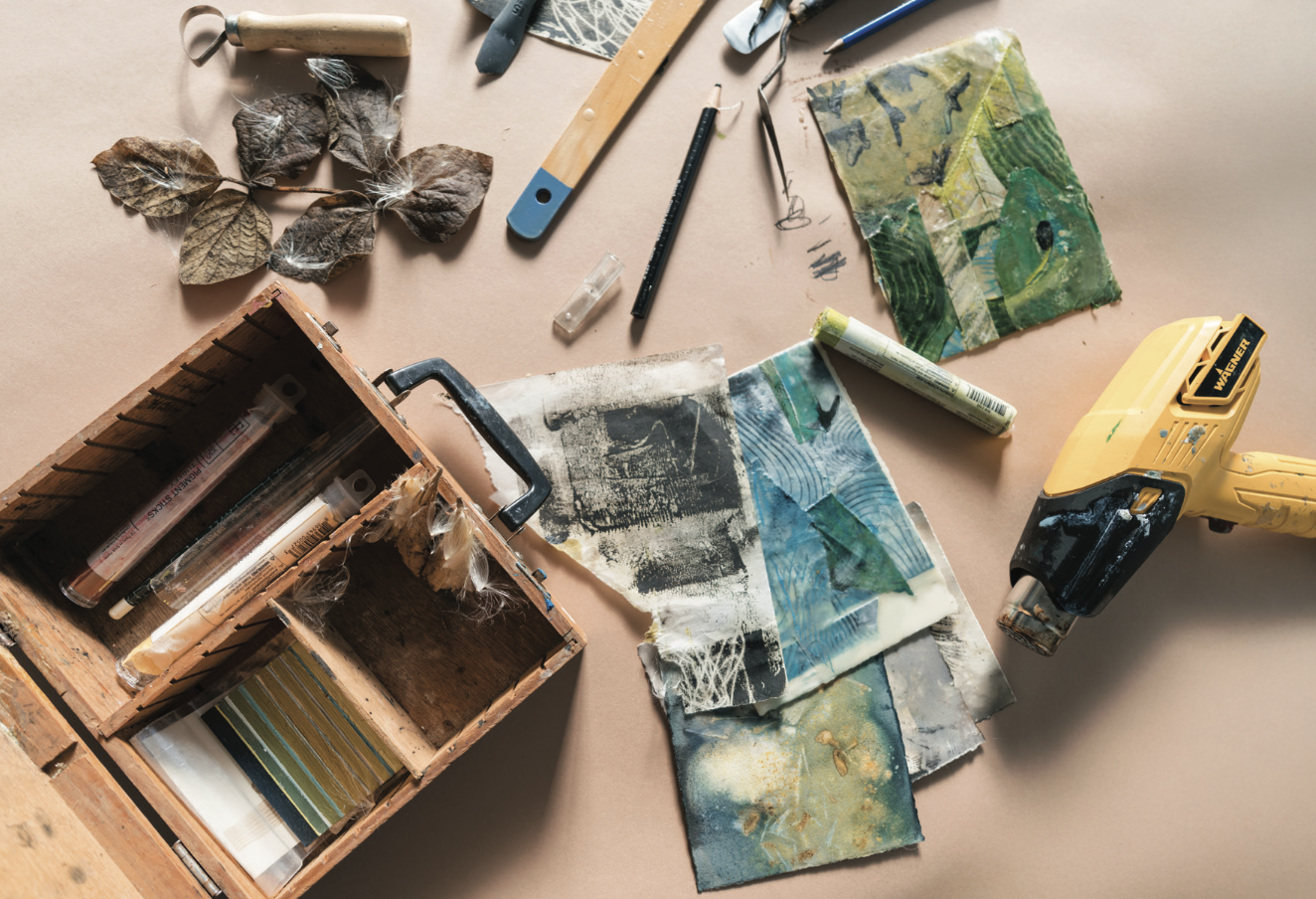
In school, Karena specifically recalls moments of walking the small town’s sidewalks to scout leaves and taking in birdwatching lessons at the park. “I remember not spotting a single bird through the binoculars but hearing them and enjoying that experience,” explained Ness. “It sort of encompasses my artwork and my collections of nature, plant life, feathers, bark... and then allowing birds to enter into my paintings because I ‘find them.’ They aren’t always planned or composed, it’s more happenstance that the marks or edges and colors hint at a suggestion of a bird, then I label it and make it appear. For whatever it’s worth, I’ve connected those memories to how I approach my work.”
Patience & Play
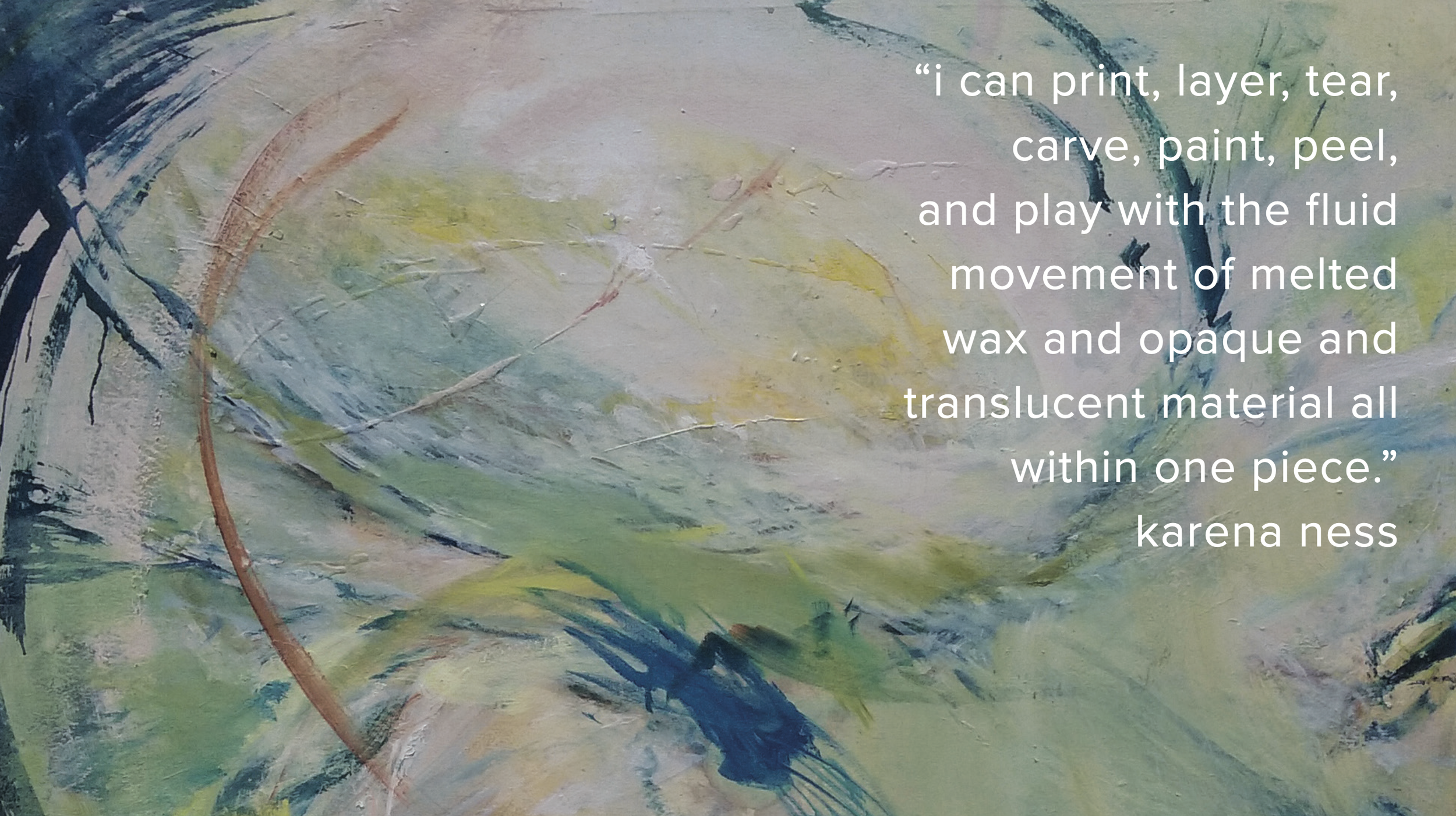
Although Karena’s collection consists of a variety of mixed media, collage, drawings, and prints, she believes encaustic is the best of all worlds. “I can print, layer, tear, carve, paint, peel, and play with the fluid movement of melted wax and opaque and translucent material all within one piece,” explained Ness.
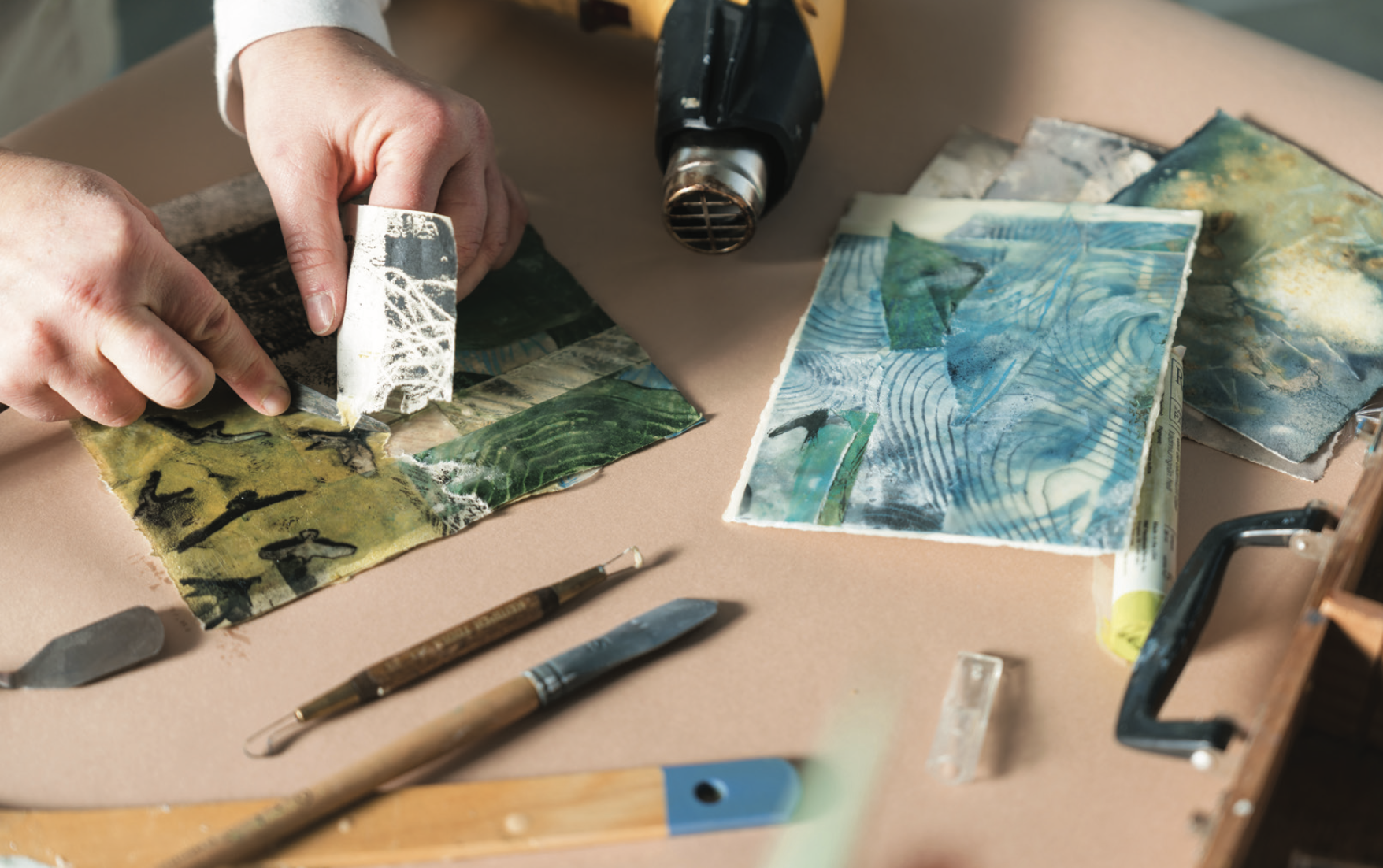
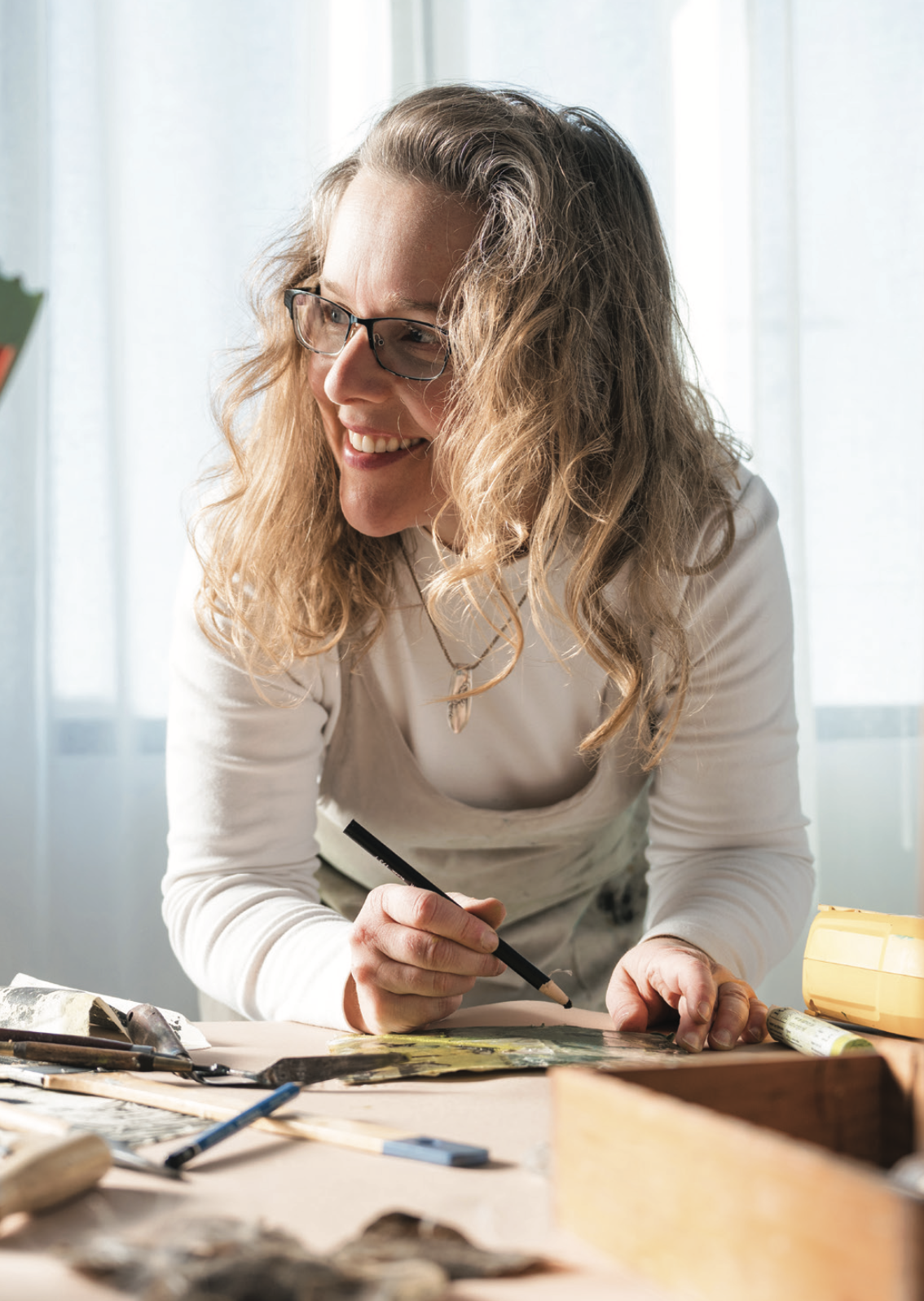
Her encaustic process uses a wax medium made of beeswax and damar resin that maintains a translucent appearance until she adds a pigmented wax. “I work in layers of wax and rice paper, which becomes translucent when the wax penetrates the paper. This allows the monoprint imagery on rice paper to appear suspended. I also paint directly into the heated wax surface as my pigmented wax is mixed on my hot plate and then painted into the image, being fused with heat during the process.”
Each rice paper layer must be fused with heat and embedded with the clear wax, so it doesn’t lift off or separate. It’s a lengthy process to settle the image together as fusing heats the wax to become ‘fluid’ or ‘responsive’ again, with edges moving or softening depending on the variables. “The process itself is a lot to orchestrate, meaning control and release of control, and that becomes exciting,” said Ness.
“When the wax is cooled and firm, I am able to use tools to carve or excavate layers that may be removed and refilled with wax. The whole process can be very intricate or loosely controlled, so the time it requires varies greatly.”
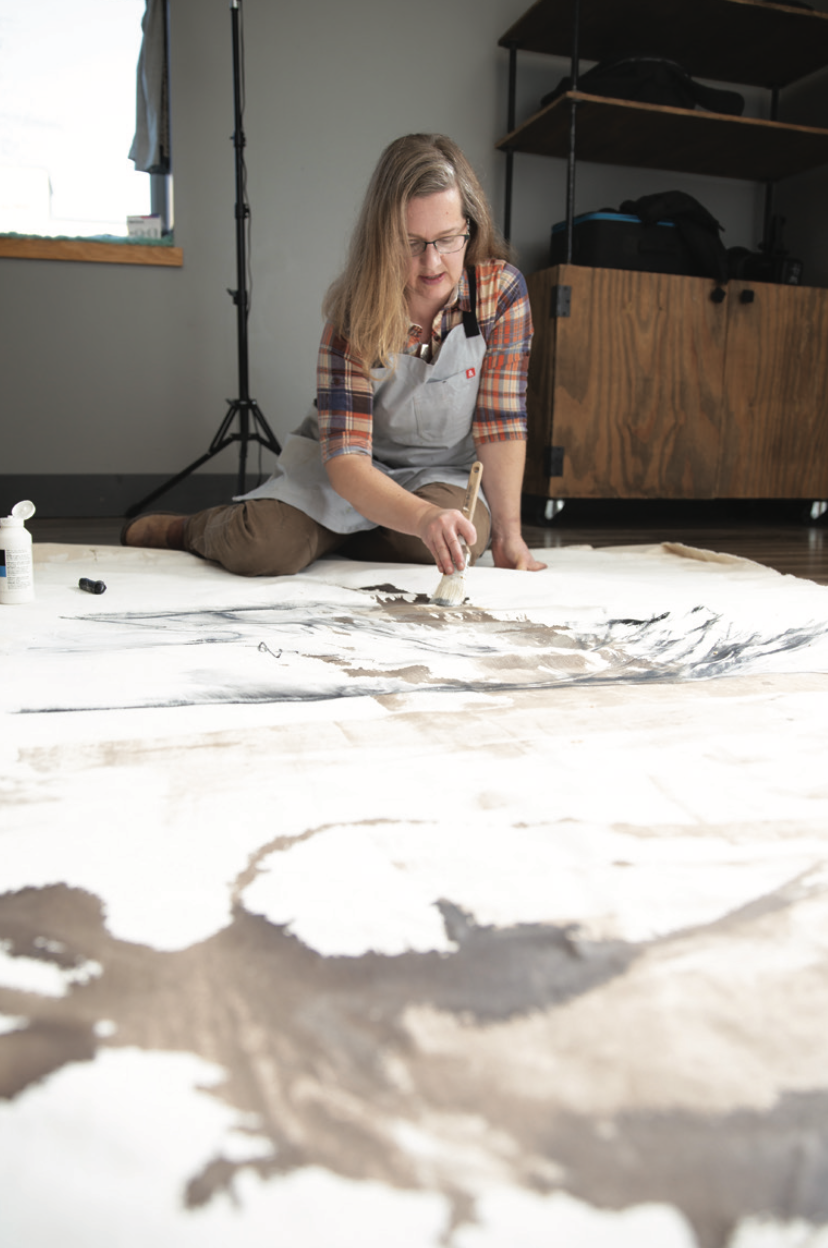
Karena uses heavy Reeves paper, and up until recently, she only mounted pieces as large as 12”x12” due to concerns of cracking; anything larger would require a more rigid surface. With the recent move into a new downtown Grand Forks studio, Karena has adapted her small-scale, most often 8”x8”, process to a larger substrate, the cradled wooden support that the encaustic piece is painted upon. Her next and much larger collection is already planned to bend boundaries, relating to aerial views of farmland and photography she’s discovered through her family’s history, including plats of the region that further define the landscape’s layers.
Layer by Layer
This fascination with layers has long been part of her artistic curiosity, but it wasn’t until her education carried her across the country and abroad that the theme truly solidified. Karena’s formal art training began at Concordia College in Moorhead, MN, in 1998, where she earned her B.A. in Art Education and Fine Art. After graduation, she taught in St. Michael–Albertville, MN, and later moved south to pursue her MFA in Painting at the Savannah College of Art and Design (SCAD). It was through SCAD that she had the opportunity to study in Lacoste, France — a pivotal chapter in her development.
“I set out with a suitcase packed with paint on my semester abroad and found I had to ship it separately, so I arrived with a limited ‘palette’ of materials, and that began my investigating stains, mark making, and translucent papers,” Ness recalled. “If I had arrived with my traditional materials, I would not have left my comfort zone. An artist should be flexible and curious and resourceful.”
That forced improvisation paid off. The constraints sparked an exploration of collage that eventually became her first true body of work. “I used translucent papers and drawn images with pen that would naturally bleed and become obscured between the layers, then used translucent acrylic mediums to build the layers. I would tear, stitch, stain, and draw within the pieces.”
Following her time in France and completion of her MFA, Karena moved to St. Augustine, FL, and soon after learned she had been accepted into a four-week residency at the Vermont Studio Center. She returned to New England spending two summers teaching at a fine arts camp in Lenox, MA. Karena would eventually spend over a decade living in Keene, NH, where she started her family and continued to teach, paint, and exhibit until a new calling emerged.
In 2018, Karena made the decision to return home to Grand Forks for a full-time teaching role that would place her closer to her parents and allow her to support them as needed. She now teaches art at an alternative high school in Grand Forks — a role she describes as one of the most rewarding of her career.
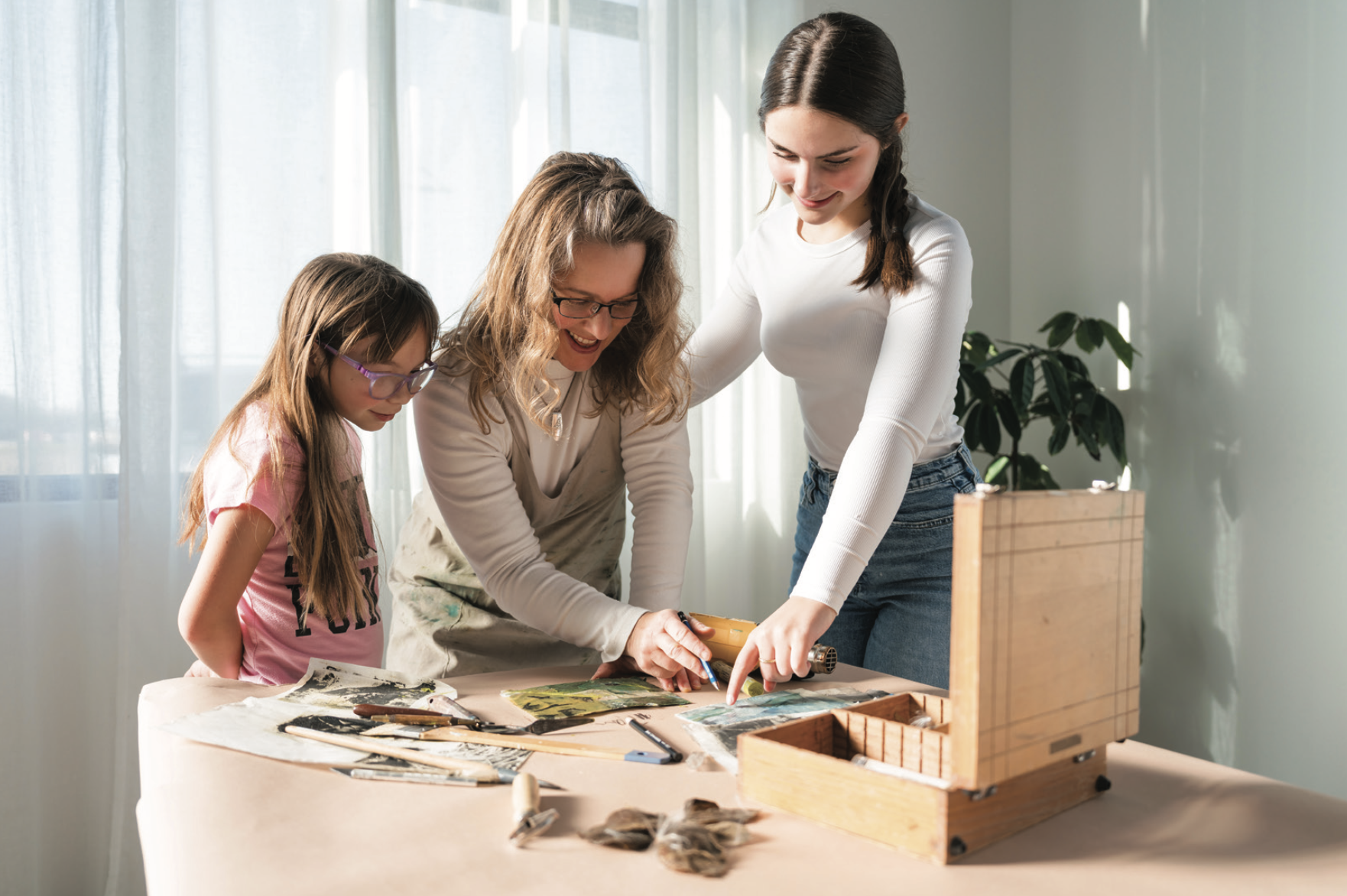
Karena and her two daughters, Allyson and Ingrid
Let the Paint Be Paint
Since her return, Karena has become a proud partner with The Arts Partnership (TAP) of Fargo-Moorhead. “I am beyond grateful for the opportunities they offer to artists,” said Ness. “Through TAP, I was a 2023 recipient of the Individual Artist Grant and a CSA stipend to create artwork for the Community Supported Art program.”
The grant enabled Karena to attend workshops at the International Encaustic Conference in Cape Cod, MA, where she learned the process of layering monotypes, including a method using rice paper, embedded imagery, and translucency within layers of wax. This education was the fuel to confidently adopt the encaustic medium as her mode.
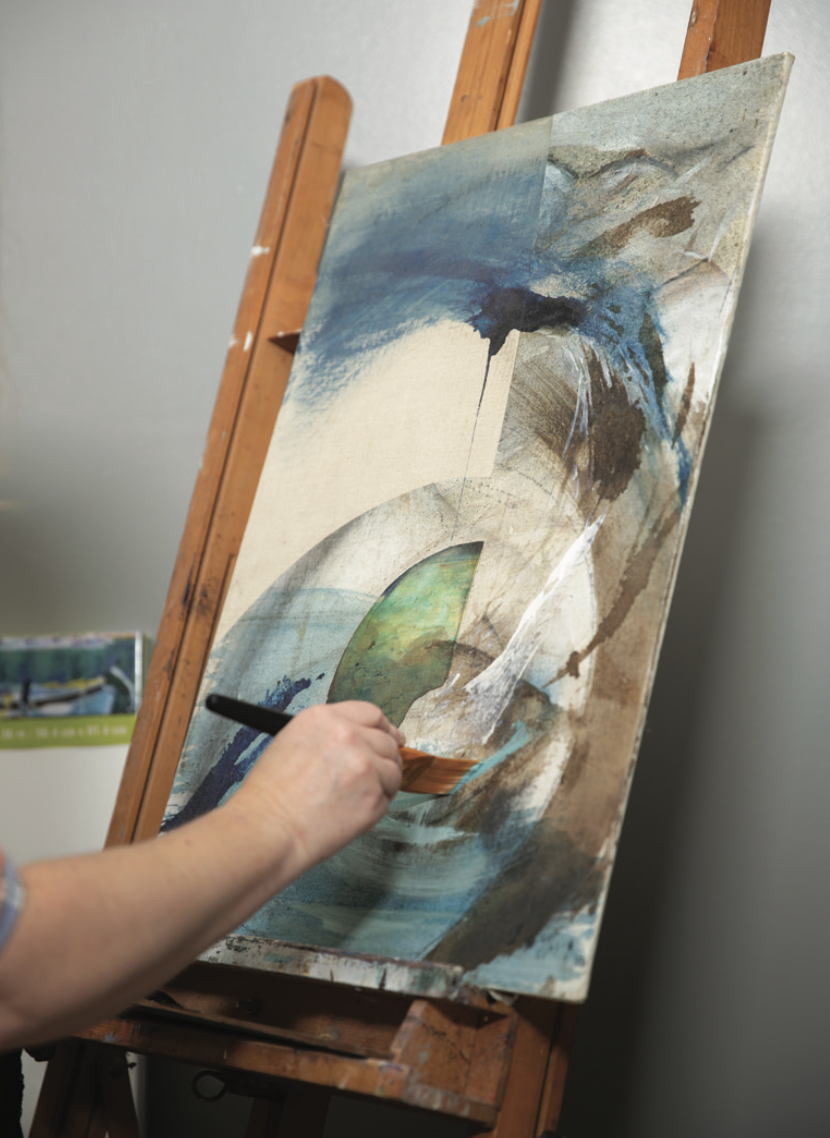
Today, Karena lets “paint be paint,” allowing it to act as it may under different applications and reactions to actions. “Understanding the properties of paint and its reactions allows you to manipulate it further or with ease in an untraditional sense, so for instance, not with a paint brush but with rags, folding canvas printing on itself, thin washes, and scraping and peeling... basically exploring the boundaries of the paint itself.” One of Karena’s favorite artists, Frank Bowling, also worked this way. “I traveled to see his show in Boston a year back and it was simply breathtaking,” said Ness. “The scale of his paintings, and how they engulfed you with color as if you could swim your eyes into them.”
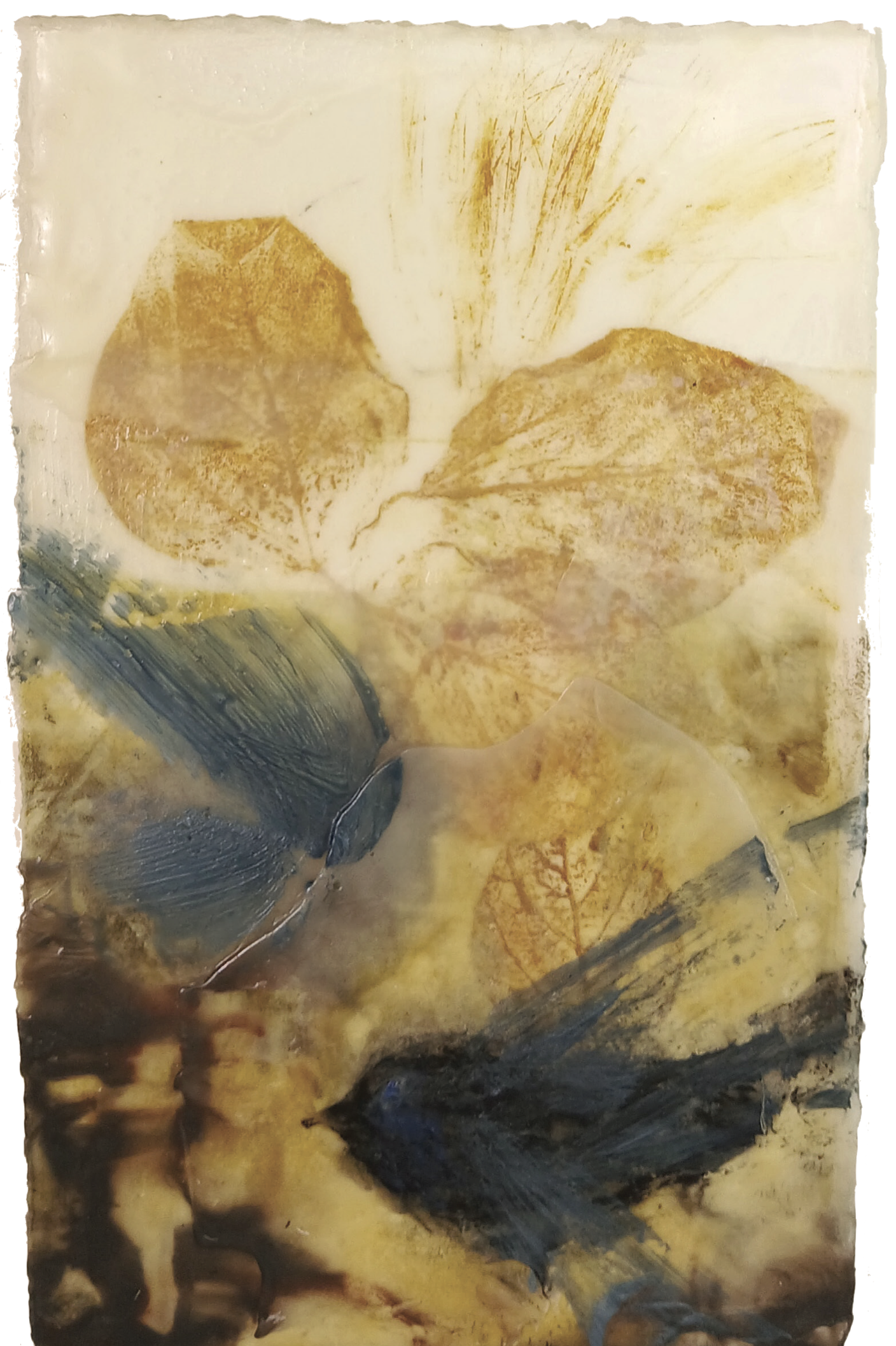
In Karena’s most recent ‘Birds Abound’ collection, she escapes the literal, instead articulating suggestions of the natural world and ambiguous silhouettes. “These birds are not predetermined; rather, they appear to land unintentionally,” explained Ness.
“I interpret the natural world in my work because it’s where I find my connection. I’m drawn to the subtle, shifting colors in nature, the blue-violet skies against yellow ochre grasses, and the rich black dirt — it just sings.”
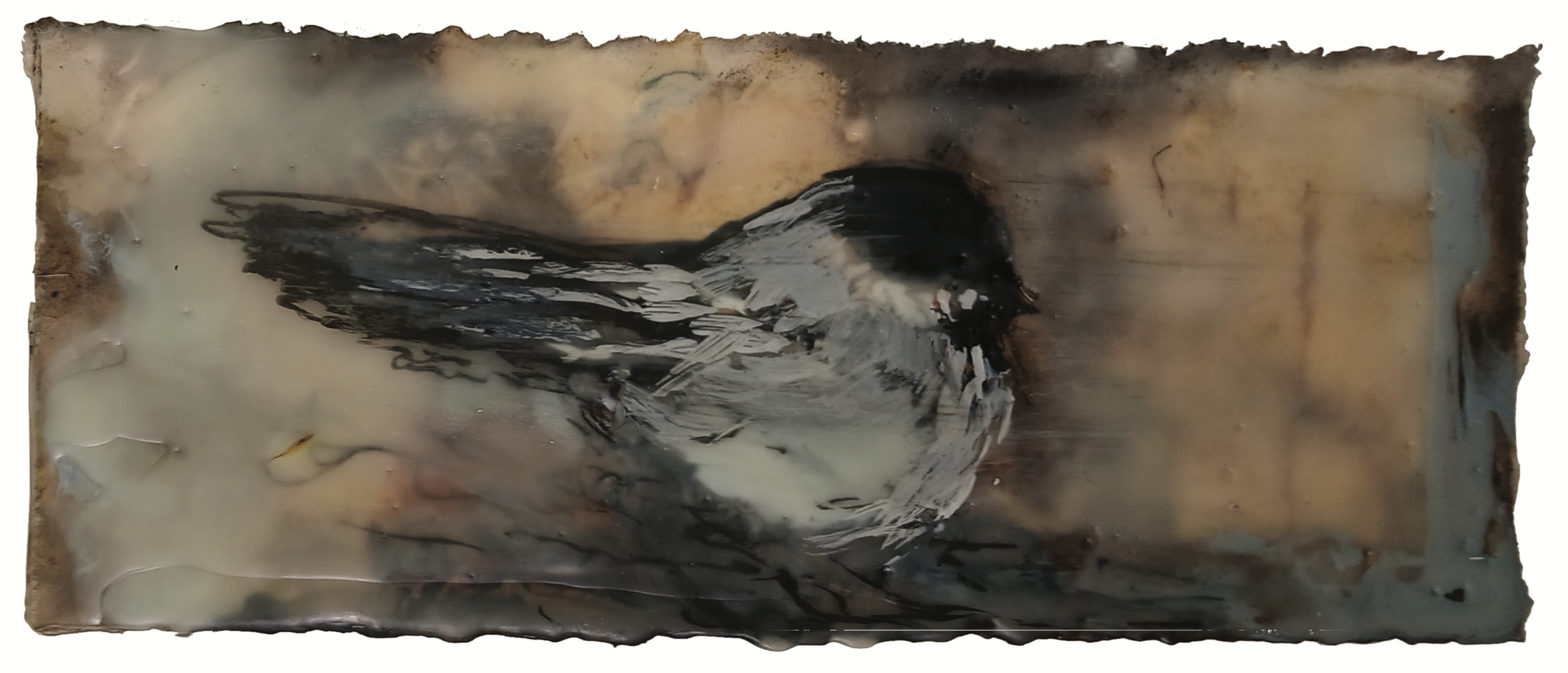
“Someone once told me to get rid of the figure and just paint strictly non-figuratively,” added Ness. “I did it for a while, and it was freeing. At some point, the birds just entered in, and I let them be part of my visual language. If I wanted to create the literal, I would take a photograph, which I often do—pulling over to the side of the road—but that becomes my mental reference, not my physical representation of the moment.”
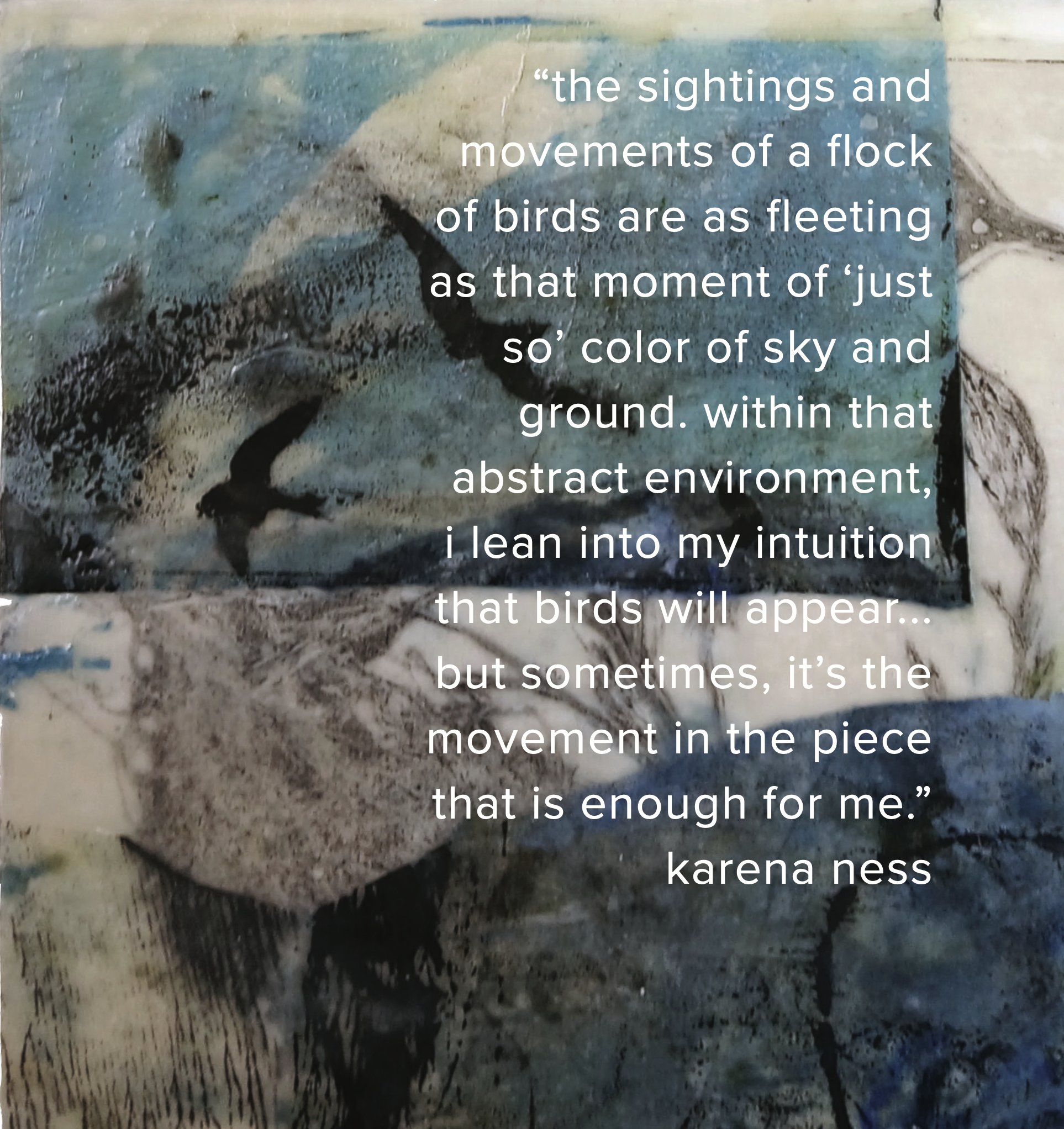
“I don’t wish to be literal in my work, as I find more interest making relationships between forms, colors, and suggestions of birds’ movement. The sightings and movements of a flock of birds are as fleeting as that moment of ‘just so’ color of sky and ground. Within that abstract environment, I lean into my intuition that birds will appear, but sometimes it’s the movement in the piece that is enough for me.”
When asked what she would like others to know about local artists, she replied, “They’re sometimes quietly carrying on their passion that makes them whole. It’s so special to know that what you create resonates with someone else’s senses or experiences… it makes that circle complete.”
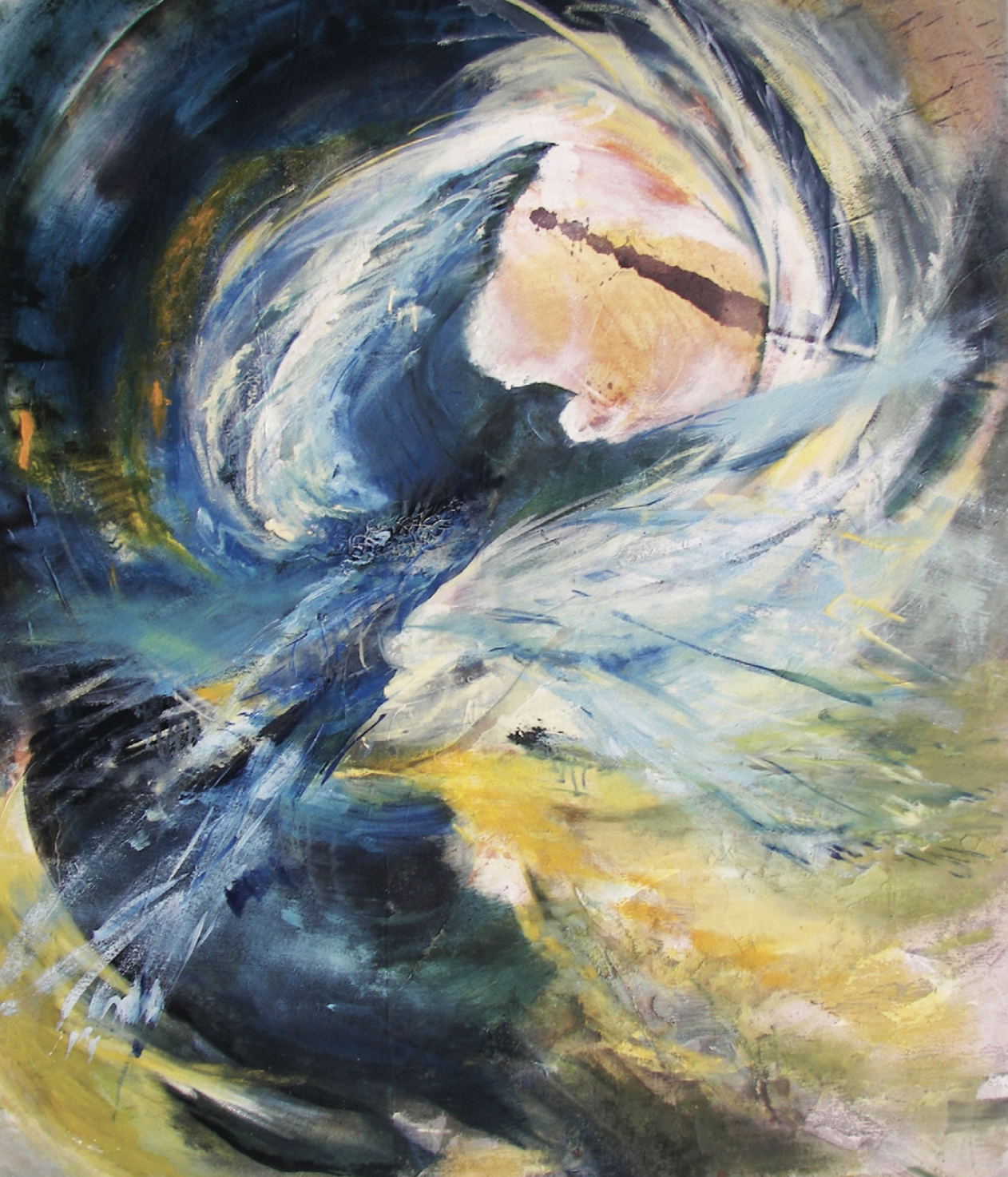
Explore Encaustic
Through the month of January, Karena’s encaustic work is on display in Fargo at Barry Hall on the NDSU campus at 811 2nd Ave N, Fargo, as well as within a special exhibit at West Acres, which showcases all former Individual Artist Grant awardees.
A full gallery of Karena’s encaustics, paintings, drawings & prints, mixed media & collage, and fine art prints can be found at her site.
VISIT THE STUDIO, BY APPOINTMENT ONLY:
River View Center
215 N. 3rd St., Grand Forks, ND
TO SHOP, VIEW, OR COMMISSION ARTWORK, VISIT:
karenajness.com